Choosing the right ultra-high-speed motor isn't something to take lightly — you really need to understand what you actually need. These motors aren’t all the same, and making an informed decision can make a big difference in how efficient and powerful your setup turns out to be. It's a good idea to look into reputable brands like Siemens or ABB, since they’re pretty well-known for their expertise in high-speed tech. Keep in mind that each model has its own unique features and specs, so don’t just go for the first one you see.
When you're weighing your options, think about things like how much power you need, the size that fits best, and how well it can handle heat. A motor that's too small might struggle, and one that’s overkill—like super powerful—could actually end up wasting energy and money. Also, if you’re planning to fit this high-speed motor into an existing system, you’ll want to take that into account and make sure everything plays nicely together.
And don’t forget to keep your long-term goals in mind. The most expensive option isn't always the best bang for your buck. Finding that sweet spot between cost and performance is key — sometimes, doing a bit of research or chatting with industry pros can really help you get a clearer picture. At the end of the day, making smart, well-informed choices can seriously boost your operations and save you headaches down the line.
Factors to Consider When Selecting an Ultra High Speed Motor
When selecting an ultra high speed motor, multiple factors come into play. The application is critical. Different environments can drastically impact performance. For instance, a High Speed Blower Motor must withstand varying temperatures and humidity levels. This requires attention to materials and design.
Another consideration is power requirements. Understanding the voltage and current specifications ensures the motor operates efficiently. A mismatch can lead to failures and reduced performance. Additionally, look into the speed range. Some applications may require a specific operational speed, and choosing the right motor can prevent headaches later.
Reliability is crucial. A dependable motor minimizes downtime. Research the manufacturer's history and reviews. Longevity often correlates with craftsmanship. Examine the availability of parts and maintenance services. Not every motor offers the same level of support post-sale. Make informed choices, as mistakes can be costly in the long run.
Understanding the Applications for Ultra High Speed Motors
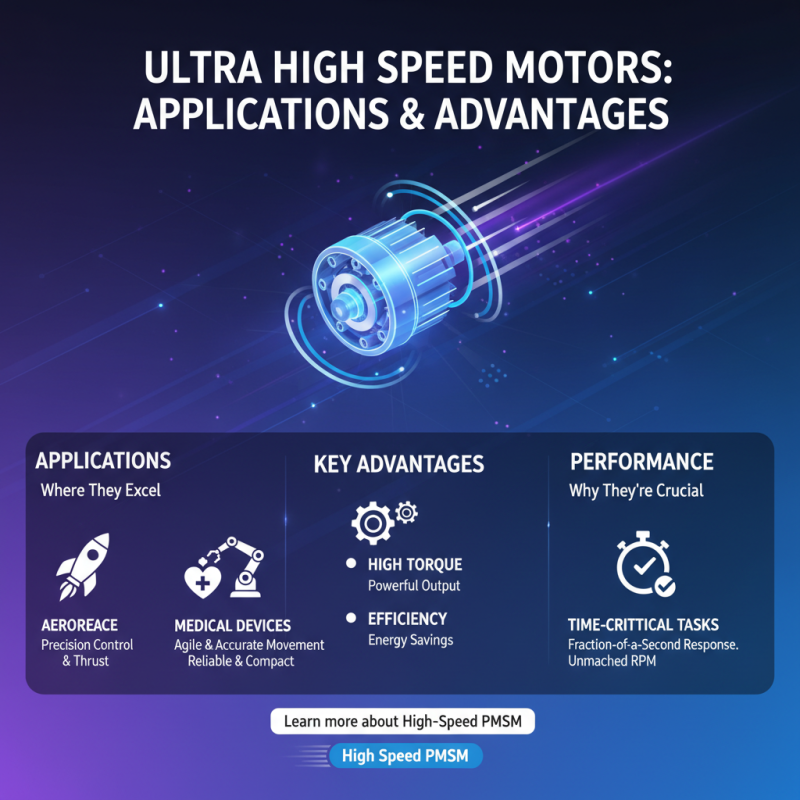
When selecting an ultra high speed motor, understanding their applications is crucial. These motors are suitable for various fields, such as aerospace, robotics, and medical devices. They often offer high torque and efficiency, making them ideal for precision-driven tasks. High Speed Pmsm provides exceptional performance in environments where every fraction of a second counts.
Robotics, for instance, requires finely tuned motions. An ultra high speed motor can enable rapid movements and quick responses. In the medical field, these motors can facilitate intricate procedures, improving surgical accuracy. However, these applications often present challenges. Choosing a motor based solely on specifications might overlook compatibility issues with existing systems.
Navigating the technical landscape of ultra high speed motors involves careful consideration. Factors like thermal management and power supply compatibility are vital. Each application may expose unique limitations. Addressing these concerns early on can prevent costly adjustments later. Some engineers may have success in one area but find challenges elsewhere. Testing in real-world scenarios can reveal such imperfections, prompting further exploration of solutions.
Key Specifications and Ratings for Ultra High Speed Motors
When selecting an ultra high-speed motor, understanding key specifications is crucial. RPM (Revolutions Per Minute) indicates how fast the motor can spin. Higher RPMs mean faster operations. Torque is another essential specification, affecting how much load the motor can handle. Motors with higher torque are better for demanding applications.
Efficiency ratings also matter. They show how effectively a motor converts electrical energy into mechanical power. A motor with high efficiency will save on energy costs and extend its lifespan. Look for motors with thermal ratings, as these indicate how well the motor can handle heat during operations.
Noise levels and vibration ratings are often overlooked. Yet, they can significantly impact the working environment. It’s essential to consider how much noise is acceptable in your specific application. Lastly, check for compatibility with control systems. It can be challenging if the motor does not integrate smoothly.
Ensuring proper specifications means thinking critically about your needs. Reflect on what you require from the motor in real-world applications.
How to Choose the Best Ultra High Speed Motor for Your Needs? - Key Specifications and Ratings for Ultra High Speed Motors
| Specification | Description | Rating/Value |
| Maximum Speed | The highest rotational speed achievable by the motor. | Up to 100,000 RPM |
| Power Output | The rated power the motor can deliver. | 1 kW - 10 kW |
| Torque | The measure of rotational force provided by the motor. | 0.5 N·m - 5 N·m |
| Weight | Total weight of the motor. | 2 kg - 10 kg |
| Efficiency | Percentage of input power converted to output power. | 85% - 95% |
| Cooling Method | Type of cooling system utilized by the motor. | Air-cooled / Water-cooled |
| Control Type | Method of controlling the motor operation. | Open-loop / Closed-loop |
Comparing Different Types of Ultra High Speed Motors
When selecting ultra high-speed motors, understanding their distinct types is essential. One can categorize them into brushed and brushless motors. Brushed motors are simpler and often more affordable. However, they tend to wear out faster. In contrast, brushless motors offer efficiency and longevity, making them a preferred choice in demanding applications.
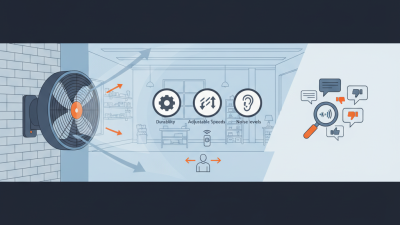
Data from industry analysis suggests that brushless motors can achieve efficiencies of up to 90%. This is particularly beneficial in applications like High Speed Wall Fans, where energy conservation is crucial. Such fans not only provide improved air circulation but also operate quietly and with less heat generation.
However, not all applications require the advanced features of brushless motors. For minimal investment in low-demand situations, brushed motors may still be relevant. Potential buyers should weigh initial costs against long-term performance. Understanding specific operational requirements will help ensure optimal motor selection.
Evaluating the Efficiency and Performance Metrics
Choosing the right ultra high speed motor requires a deep understanding of efficiency and performance metrics. Efficiency is crucial in determining how much energy the motor consumes versus what it delivers in output. A motor with high efficiency can save operational costs over time. Look for specifications that detail energy consumption and output performance. These numbers guide you in evaluating the real-world application of the motor.
Performance metrics also play a vital role in decision-making. Factors like torque, speed, and load capacity dictate how well a motor will perform in your specific application. For instance, when dealing with High Volume Low Speed scenarios, torque output becomes increasingly important. A motor that excels in maintaining torque at lower speeds can enhance productivity in tasks requiring precision.
It’s important to remember that data sheets may not always reflect real-world performance. Take time to review case studies or user experiences to gain insights into how different motors actually function under specific conditions. This exploration can reveal limitations, prompting critical reflection on your needs and potential compromises.
Cost vs. Performance: Budgeting for Quality Ultra High Speed Motors
When selecting an ultra high-speed motor, cost versus performance is a critical consideration. Budget constraints can limit options, yet a higher investment often leads to better quality and efficiency. Motors that excel in speed and reliability usually come with a steeper price tag. However, cutting corners may result in long-term operational issues and increased maintenance costs.
Understanding the specifications is vital. Always balance your needs with your budget. Basic models might suffice for simple tasks, but advanced applications demand high-performance motors. Think about the potential bottlenecks that a lower-quality motor can cause. Frequent breakdowns can lead to production delays. Also, cheap motors often lack longevity. Their initial low price may be tempting, but the total cost of ownership can skyrocket if reliability is compromised.
Reflecting on your specific applications can help guide your decision. Consider aspects like load capacity, speed requirements, and energy efficiency. Investing in a reliable motor can enhance your overall productivity. Yet, beware of overspending on features you may never use. Align your choices with your business goals to achieve optimal performance at a reasonable cost.
Comparison of Ultra High Speed Motor Performance and Cost
This chart illustrates the cost and performance of five different ultra high speed motors. As the chart shows, while the cost increases, so does the performance in terms of RPM, helping you assess the best choice based on your budget and requirements.
Top Manufacturers and Their Innovations in Ultra High Speed Motors
When selecting an ultra high speed motor, it's crucial to explore innovations from key manufacturers. These leaders prioritize efficiency, performance, and reliability. Their motors are designed for specific applications, catering to unique industrial needs. The technology behind these motors continues to evolve, incorporating advancements like magnetic bearings. These features reduce wear and enhance longevity.
Many manufacturers are focusing on energy efficiency. This improvement not only benefits the environment but also reduces operational costs. Some designs feature integrated cooling systems for optimal performance. However, while these innovations offer great advantages, they may also introduce complexity. Users must consider maintenance and the skill required for proper operation.
Innovation does not stop at motor design. Some companies experiment with advanced materials to increase durability. This pursuit of excellence requires continuous adaptation. While new models promise improved performance, they often come with a learning curve. Users should stay informed about updates and best practices in the field. Balancing innovation with reliability remains a challenge in this fast-paced industry.
Maximizing Comfort and Efficiency: The Advantages of Industrial HVLS Fans in Expansive Environments
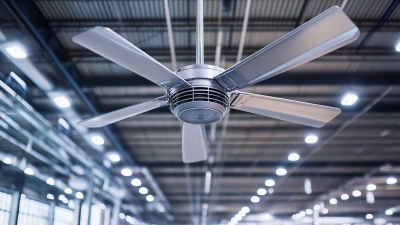
In today's expansive industrial environments, maximizing comfort and efficiency is paramount, and industrial Hvls Fans are revolutionizing the way we achieve this goal. These high-volume, low-speed fans are specifically designed to optimize airflow while keeping energy consumption to a minimum. By circulating air effectively across large coverage areas such as warehouses and factories, these fans ensure a consistent and pleasant climate, crucial for both worker comfort and operational efficiency.
The durability and quiet operation of industrial HVLS fans further enhance their appeal. Constructed from high-quality materials, these fans are built to withstand the rigors of industrial use, ensuring long-lasting performance that minimizes the need for frequent replacements. Their quiet operation contributes to a more pleasant working environment, allowing employees to focus on their tasks without the distraction of noisy machinery. Additionally, the easy installation process and low maintenance requirements make it simple for facilities to incorporate these fans into their operations, tailored to meet specific needs through customizable options in size and configuration.
The proven performance of HVLS fans across various industries underscores their effectiveness in providing optimal ventilation solutions. As businesses increasingly prioritize energy efficiency and worker comfort, these fans present an invaluable investment for any large-scale facility.
FAQS
: Ultra high speed motors are ideal for aerospace, robotics, and medical devices.
They enable rapid movements and quick responses, allowing for finely tuned motions.
Compatibility issues with existing systems may be overlooked if only specifications are considered.
Proper thermal management ensures optimal performance and prevents overheating, which can be costly.
They focus on efficiency and reliability, incorporating advancements like magnetic bearings and cooling systems.
New technologies can introduce complexity, requiring users to develop new maintenance skills.
Improved energy efficiency lowers operational costs and positively affects the environment.
New models may come with a learning curve and require users to adapt continuously.
Yes, it often reveals imperfections and prompts further exploration of solutions.
Balancing innovation with reliability remains a constant challenge for many users.
Conclusion
Selecting the best ultra-high-speed motor involves several critical factors to ensure it meets specific application requirements. Understanding the diverse applications for ultra-high-speed motors is essential, as it determines the needed specifications and ratings for optimal performance. Key specifications, such as torque, speed, and efficiency, play a significant role in comparing different types of ultra-high-speed motors available in the market.
Evaluating performance metrics and efficiency is crucial when assessing different motor options, as it affects the overall productivity of operations. Additionally, budgeting for quality ultra-high-speed motors requires a balance between cost and performance to achieve the best value. Finally, staying informed about advancements from leading manufacturers can help identify innovative solutions that enhance motor capabilities, ensuring the chosen ultra-high-speed motor aligns with both current and future needs.

 +86-13636393801
 Contact Email