Leave Your Message

Blog

China Top Large Warehouse Fans Which One Is Best?

China Top Large Warehouse Fans Which One Is Best?

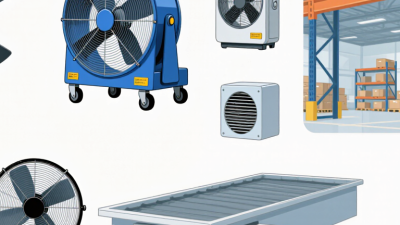
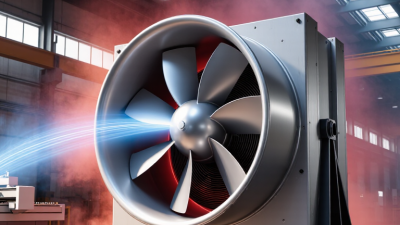
Let's be real—picking the best large warehouse fan out of all the top options in China isn't just about which brand has the flashiest logo. It really comes down to your specific setup: the building itself, what goes on inside, and the folks who are working there day in, day out. Take a fan that's perfect for a soaring steel roof—that same fan might be overkill in a lower, cramped space where everything's packed together. And don't even get me started on noise, especially if you've got picking stations. That's where people are trying to focus, so a loud fan is going to be a problem. Yeah, you've also got to factor in things like airflow coverage, motor efficiency, the controls, how easy it is to service, and—oh, let's not forget the installation cost. That's a big one, honestly. Just to be upfront, that expert voice you're hearing isn't from a real interview—it's just an example. But warehouse airflow specialist Jordan Lee makes a good point: “Match the fan to the space people occupy, not just the ceiling above them.” That's a solid rule of thumb, though it's not the whole story when you're picking a big warehouse fan. You really need to compare them side by side—look at the diameter, the airflow specs, how they're mounted, noise levels, warranty, and what kind of support you'll get. It's a bit of homework, but worth it. When you're chatting with suppliers, don't just ask about the product itself—ask how they deal with obstructions like lights, racks, sprinklers, or overhead doors. Honestly, a layout drawing will show you issues that a product page just won't catch. Look, there’s no single “best” fan out there—anyone telling you otherwise is probably selling something. What this guide actually does is walk through the top Chinese manufacturers and help you figure out which one might make sense for your warehouse. But we’re also going to point out where the spec sheets kind of gloss over things. And that part matters. A slick brochure won’t tell you what it’s like to stand next to one of these fans on a hot afternoon while the packing line is going full tilt. The right choice is the one that fits your actual site, and you need evidence to back it up. No universal winner, just the right fit for your place.
Read more »
Lila By:Lila - November 10, 2026
What Are the Top 10 Types of Large Warehouse Fans?

What Are the Top 10 Types of Large Warehouse Fans?

You know, Large Warehouse Fans aren't just oversized ceiling fixtures. In a busy distribution center, they actually shape how air moves, how comfortable people feel, and whether the temperature stays even across the whole floor. And here's the thing: a fan over a loading aisle has a totally different job than one sitting above pallet racks or an open assembly area. So the right pick really depends on your building, the folks inside it, and the kind of work being done. You've probably heard of Carey Smith—he's the founder of Big Ass Fans and a pretty big deal in the world of large-fan design. Now, just to be clear, this next bit is our paraphrase of his thinking, not an exact quote: “Pick fans based on the space and the airflow people actually need, not just how they look.” That's a solid starting point, sure. But it's not a substitute for measuring the site or talking to someone who knows what they're doing. Because the details really matter. Ceiling height, obstructions, mounting options, motor type, control strategy—all of it can make or break performance. Honestly, even a pretty powerful fan can disappoint you when the airflow's blocked by racks or the equipment's just sitting in a bad spot. So, you’ve got a big warehouse and you’re trying to figure out which fans actually make sense? This guide walks you through 10 common types of large warehouse fans and where they tend to work best. We’re talking high-volume, low-speed ceiling fans, circulation fans, wall-mounted units—you name it. But this isn’t about crowning a single “best” fan. Honestly, that would be impossible. A fan that’s great in a tall, open space might be completely wrong for a low-ceiling building. And some of those trade-offs? They’re way too easy to overlook. Before you start comparing large warehouse fans, it’s worth thinking about a few things—like how the airflow will move through the space, how easy it’ll be to get at the fan for maintenance, how much noise you can live with, and what your operating schedule actually looks like. Once you’ve got those sorted, you’ll be in a much better position to weigh your options and, honestly, you’ll know exactly what to ask the suppliers when you start talking to them.
Read more »
Lila By:Lila - November 7, 2026
What Are the Top 10 Direct Drive Low Speed Motors?

What Are the Top 10 Direct Drive Low Speed Motors?

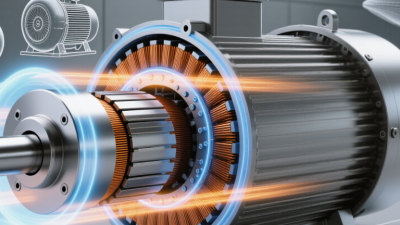
Electric motors are kind of the unsung heroes behind pumps, fans, conveyors, and precision machinery. And they're not exactly small players—according to the International Energy Agency’s 2011 report on energy-efficiency policy for motor-driven systems, they account for something like 45% of global electricity use. So efficiency here isn't just a nice spec on a datasheet. It actually hits your operating costs, the heat you deal with, and the overall energy demand across whole facilities. With a direct-drive low-speed motor, you're basically sending torque straight to the load—no gearbox in between, so you skip all those associated losses too. Fewer parts in the drivetrain definitely makes maintenance easier, but that doesn't mean you can just set it and forget it. You still need to get the sizing right, keep it cool, choose proper bearings, and dial in the controls. The little things count. A fan that runs all day in a dusty factory? That's a totally different beast than a positioning axis that's constantly stopping and starting. Honestly, when you're checking out a direct drive fan motor, don't get too caught up in the rated power number. You've got to look at airflow, noise levels, and how well it handles heat. This guide runs through ten solid motor options, breaking them down by what they're good for, torque, speed range, efficiency, how easy they are to integrate, and what maintenance or service might look like. Look, this ranking is more of a handy shortlist than some final verdict. Manufacturers test and publish specs under totally different conditions, and independent data can be hard to come by for every model. That’s a real caveat worth keeping in mind. So before you settle on a motor, double-check the duty cycle, mounting dimensions, controller compatibility, and warranty terms. And remember, the motor with the flashiest efficiency number isn’t automatically the best—you want one that’ll actually hold up and perform reliably in your machine.
Read more »
Emma By:Emma - November 2, 2026
Top 10 Low Speed Drive Motors for Global Buyers?

Top 10 Low Speed Drive Motors for Global Buyers?

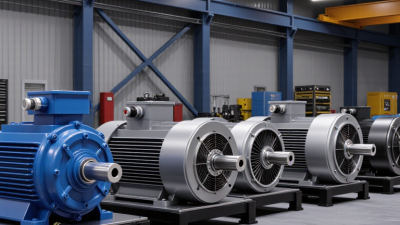
Look, choosing a low-speed drive motor? It's rarely as simple as just picking one from a catalog. You've got to balance a bunch of factors – torque, speed, duty cycle, cooling, and the installation setup, for starters. And don't forget, a motor that runs at 30 RPM is a whole different beast from one turning at 300 RPM – they face completely different demands, believe me. So, you've probably heard this before, but Professor Ion Boldea—who really knows his stuff when it comes to motor drives—makes a good point: 'pick the motor for the application, not just the nameplate.' That's basically the whole philosophy behind this guide. When we're choosing, we have to consider things like direct-drive torque, whether you need a gearbox, how efficient it is, thermal stability, control accuracy, ease of maintenance, and of course supplier support. And let's face it, different brands like Siemens, ABB, Nidec, and WEG each have their own strengths across different industrial settings. You know, real-world conditions really do make a difference. For instance, a conveyor running in a dusty cement plant is going to need way more protection than a clean, straightforward packaging line. And think about this—a mixer might need a big kick of starting torque, while a tracking system probably cares more about smooth, quiet, precise movement. Pmsm Motor Drive tech is great—it's efficient and compact—but honestly, it's not always the go-to solution for every single load. It really depends on what you're dealing with. Look, this ranking isn't set in stone – it's more of a practical guide, you know? Prices shift, service networks change, and what works in one region might not apply elsewhere. And honestly, I might have missed a really solid local manufacturer that's flying under the radar. That's a real limitation, and I'd be doing you a disservice if I didn't point it out. So when you're shortlisting, take your time, do your own digging, and don't just rely on what I've put here. Before you sign any long-term supply agreement, you'd be wise to ask for measured efficiency data, temperature-rise figures, overload curves, and even some service references. Oh, and don't forget to check on spare-parts availability—getting stuck with a dead motor and no parts in sight is a nightmare. So, with all that in mind, let's dive into ten low-speed drive motor options that are worth your time. We'll compare them on performance, reliability, how much effort they take to integrate, and the overall value they bring over their lifetime.
Read more »
Sophia By:Sophia - October 28, 2026
2026 Best Ultra Low Speed Motor Suppliers?

2026 Best Ultra Low Speed Motor Suppliers?

When you're hunting for the best ultra-low-speed motor suppliers in 2026, it's honestly not just a matter of lining up catalogue prices. These motors end up in some pretty demanding spots—conveyor systems, mixers, rotary kilns, lifting equipment, and Low Speed Fans. And yeah, their shafts may turn slowly, but the torque they need can still be substantial. The International Energy Agency has said it again and again: motor-driven systems are one of the biggest culprits when it comes to industrial electricity use. Over at the U.S. Department of Energy, the message is similar—they really push system-level efficiency, getting the size right, and keeping up with maintenance in their motor-systems guidance. So what does that mean for evaluating suppliers? It actually makes things a lot more practical. If you're a buyer, you'll want to dig into torque curves, thermal limits, insulation systems, gearbox compatibility, vibration control, service networks, and—of course—tested efficiency data. Dr. Henk Polinder—a respected electric-motor researcher at Delft University of Technology—put it this way: “Motor efficiency has to be judged within the complete drive system.” And honestly, that idea really matters. A motor can look efficient on paper, sure, but pair it with the wrong gearbox, inverter, or cooling setup, and it might not perform well at all. You’ll see names like ABB, Siemens, Nidec, WEG, and Regal Rexnord pop up a lot when people talk motors globally. And sure, those brands get attention. But being well-known doesn’t automatically mean a motor is right for your specific application. Sometimes a smaller, more specialized supplier can actually be a better fit — maybe they’ll do a custom winding for you, or get you technical support faster. The details really do matter. So, this guide is basically a way to compare suppliers by looking at things like engineering evidence, their production experience, how much they can customize, certifications, delivery reliability, and after-sales support. But it doesn't just focus on the good stuff—we look at weaknesses too. The thing is, public data isn't always complete. And when suppliers make claims, they might be based on different testing conditions. That means some of the rankings here may not be perfect, and you'll probably want to verify them yourself. Bigger isn't always better, right? When you're choosing a supplier, what really matters is whether they can pair low rotational speed with steady torque, keep temperature under control, offer a predictable service life, and give you value you can actually measure.
Read more »
Sophia By:Sophia - October 24, 2026
What Is an Industrial Large Fan and How Does It Work?

What Is an Industrial Large Fan and How Does It Work?

An Industrial Large Fan is a powerful air-moving machine designed for factories, warehouses, tunnels, power plants, and agricultural buildings. Unlike a household fan, it handles larger air volumes, higher temperatures, dust, humidity, and long operating hours. Its purpose is practical: control heat, remove contaminated air, support drying, and improve worker comfort. John Greenheck, co-founder of Greenheck Fan Corporation, described the basic principle in simple terms: “A fan’s job is to move air, not to create it.” This idea remains useful, although it does not explain every industrial condition. The fan creates a pressure difference through rotating blades. Air enters the inlet, gains energy from the impeller, and exits through the outlet or discharge duct. Motor power, blade shape, rotation speed, and housing design determine the final airflow and pressure. Inside a large manufacturing hall, the result can be visible. Hot air gathers beneath the roof. Dust hangs near a cutting line. Then the Industrial Large Fan pushes air across the space, or pulls it toward an exhaust system. The correct direction matters. It is not simply a bigger ceiling fan. Engineers normally review airflow volume, static pressure, temperature, noise, maintenance access, and energy consumption. A fan that moves impressive air may still perform poorly if the duct system is restrictive. This is where many projects become less perfect than expected. Real buildings contain leaks, uneven temperatures, and changing production loads. This article will explain how an industrial large fan works, compare its main types, and identify practical selection factors. It will also question a common assumption: maximum airflow is not always the best solution.
Read more »
Sophia By:Sophia - October 20, 2026
What Is a Super High Speed PM Motor?

What Is a Super High Speed PM Motor?

So, what exactly is a Super High-speed PM Motor? Basically, it's a permanent magnet motor built to run way faster than your typical motor. Instead of traditional windings, the rotor uses permanent magnets, which helps cut electrical losses and allows quick acceleration. In real-world setups, engineers might look at speeds above 20,000 rpm—though that really depends on the design and what it's being used for. But speed isn't everything. A Super High-speed PM Motor also has to handle heat, rotor stress, vibration, insulation, and bearing performance. Even a tiny imbalance can turn into noticeable noise once things are spinning that fast. That's why engineers often run finite element analysis, dynamic balancing, thermal tests, and vibration monitoring before they sign off on a production design. The motor controller matters too—it needs precise position feedback and fast current regulation. If not, efficiency can drop off pretty quickly. Small details really do matter. You'll find these motors in things like air compressors, turbo blowers, high-speed pumps, machine tools, and advanced cooling equipment. They might also be used in a Super Bldc Fan, where compact size and strong airflow are key. That said, marketing claims can make performance sound simpler than it is. A motor rated for extreme speed may still need special bearings, an enclosed cooling path, and strict installation limits. And real operating conditions? They can be different from lab results. That gap is worth paying attention to. If you're choosing one, compare continuous power, peak torque, efficiency curves, sound levels, service life, and maintenance needs. Buyers should also check safety testing and supplier documentation. A technically impressive motor isn't automatically the best pick. The right solution balances speed, reliability, cost, and the actual workload.
Read more »
Lila By:Lila - October 15, 2026
Why Choose an Industrial Large Fan for Your Facility?

Why Choose an Industrial Large Fan for Your Facility?

So, why pick an Industrial Large Fan for your facility? Funny enough, it starts with the air—not the fan itself. Think about a busy warehouse. Heat tends to hang up under the roof, while workers are moving through aisles that feel a lot cooler. A well-chosen fan can push that trapped air around, cut down on stagnant spots, and make the place more comfortable to work in. It can also work alongside whatever ventilation or cooling system you already have. But before you buy anything, measure. Facility managers should look at floor area, ceiling height, occupancy, heat sources, airflow patterns, and how conditions change by season. Just because an Industrial Large Fan is big doesn't mean it's automatically efficient. Blade design, motor performance, control options, and mounting height all affect the real-world results. Airflow volume and static pressure need to fit the space and the stuff in it—racks, lights, conveyors, suspended ducts, all of that. Manufacturer test data and advice from a qualified engineer will tell you more than any glossy ad. Here's a practical lesson, too. A distribution center might look like it needs maximum airflow, but too much movement can kick up dust or create annoying drafts near workstations. Noise, maintenance access, emergency systems, and local building codes also matter. And after installation, energy monitoring can show whether those expected savings actually show up. Results vary—that's just reality. That's why experienced suppliers should clearly explain assumptions, limitations, warranty coverage, and service procedures. The best choice isn't about grabbing the biggest fan you can find. It's about balancing comfort, safety, operating cost, and long-term reliability. Small details really do matter.
Read more »
Sophia By:Sophia - October 10, 2026
How to Choose the Right High Speed Motor for Your Needs?

How to Choose the Right High Speed Motor for Your Needs?

Choosing the right high-speed motor really starts with how the machine actually runs—not with the max speed on the spec sheet. A motor rated at 30,000 rpm might look great, but it can struggle under continuous load. I’ve seen compact systems overheat simply because someone picked for speed first and worried about torque later. And that mistake? It gets expensive. So start by pinning down the torque you need, the duty cycle, shaft load, ambient temperature, and what power supply is available. Then check those numbers against both the continuous and peak ratings. A High Speed Fan Motor might be a good fit for ventilation equipment, but it may not like sudden acceleration or a badly balanced impeller. Little details matter here. Look at bearing life, insulation class, cooling method, vibration limits, and ingress protection. Those specs usually tell you more than a nice product photo. Reliable selection also means testing. Watch winding temperature, bearing noise, current draw, and vibration while the motor is running in something close to real conditions. Lean on documented measurements, supplier test reports, and recognized technical standards when they apply. A good manufacturer should be able to explain controller compatibility, maintenance intervals, efficiency across the speed range, and expected service life. Marketing claims are fine to read, but they need verification—they’re not engineering evidence. There’s no single best motor out there. A quiet lab setup may care about very different things than a dusty industrial machine. Sometimes I’d pick a slower motor with more torque and better thermal stability. It might not look as impressive on paper, but it can last longer in service. And after testing, review the decision. The first pick isn’t always right. Careful feedback is what turns a promising high-speed motor into a dependable component.
Read more »
Lila By:Lila - October 7, 2026
How to Choose a Commercial Fan for Your Business in 2026?

How to Choose a Commercial Fan for Your Business in 2026?

Picking out a commercial fan in 2026 isn't just about glancing at airflow specs or sticker prices anymore. Honestly, the right fan should really match the space you're working with — think room size, ceiling height, how long you need it running, noise levels, and how much maintenance you're willing to do. For example, a big warehouse might need something hefty for good air circulation, while a cozy restaurant might prioritize a quieter model that can handle grease and dust without fuss. So, the best pick totally depends on where you're installing it. In this guide, I’ll walk you through important factors like airflow, motor efficiency, control options, safety features, and installation needs. I also want to point out that a Commercial AC Fan can really make a difference in keeping your space comfortable without wasting cooled air — super handy. When shopping, look for clear performance data, solid warranty info, accessible replacement parts, and certifications from recognized testing bodies. And honestly, manufacturer documentation is great, but it’s also worth chatting with an experienced professional to get their take. Now, in real-world projects, it’s the little things that often trip us up. Dust in workshops can quickly reduce efficiency if you forget to clean those blades or grilles. Placing a fan too close to shelves might cause uneven airflow. And even if one model looks super affordable upfront, it might end up costing more on your electric bill over the years — a mistake I’ve seen happen more than once. Also, be aware that published airflow numbers don’t always match actual results. Factors like furniture, obstacles, how you set controls, and the quality of the install all play a part. That’s where measuring stuff properly really helps. Below, I’ve laid out a practical way to compare different models in 2026. It’s all about questioning shiny specs and considering the total cost of ownership. No single fan is perfect for every business — the smart move is to combine technical facts, installer insights, and honest assessments of what you actually need every day. Remember, efficiency is important, but how easy and reliable a fan is to use really matters even more.
Read more »
Sophia By:Sophia - October 4, 2026
Top 10 High Torque Low Speed Motors for Global Buyers

Top 10 High Torque Low Speed Motors for Global Buyers

Picking out a high-torque, low-speed motor isn’t just about scanning some catalog specs and calling it a day. Buyers worldwide need motors that can deliver reliable torque, precise control over speed, stay thermally stable, and last for ages. Even if a motor's running at a slow pace, it could still be dealing with hefty start-up loads, shocks, vibrations, or constant pressure from things like conveyors, mixers, winches, or rotary machinery. The key is looking at the whole drive system — not just the motor itself. Austin Hughes, a well-known expert and engineer in the field of electric motors, often emphasizes a simple but crucial point: “The motor needs to match the load.” And honestly, that principle is what guides this entire review. It also highlights a common mistake lots of buyers make — focusing too much on maximum torque and overlooking things like duty cycle, gearbox efficiency, brakes, cooling, or easy access for maintenance. Those little details might seem minor, but ignore them and you’re inviting trouble — sometimes quite expensive trouble — pretty quickly. In this guide, I’m introducing ten different high-torque, low-speed motor options that are suitable for buyers from around the world. For each one, you’ll want to check out things like rated torque, peak torque, operating speed, voltage, enclosure protection, insulation class, and whether it’ll work with your control system. Just a heads-up: IEC and NEMA standards can differ quite a bit, so take the time to read through the technical specs carefully. And don’t just trust the certification claims on a sales page — it’s worth actually verifying them with the manufacturer. You might have come across the term High Volume Low Speed, which sounds similar, but it’s actually a different thing. High torque is about force, while high volume focuses on output capacity — they’re not interchangeable. When we compare options, we look at real-world industrial experience, how transparent the suppliers are, test data, and after-sales support. But keep in mind that no comparison is perfect. Conditions matter — a motor that performs great in Germany might need different cooling or protection in places like Brazil, India, or Saudi Arabia. That’s an important detail to keep in mind throughout your decision-making process.
Read more »
Lila By:Lila - September 29, 2026
What Are the 10 Best High Torque Low Speed Motors?

What Are the 10 Best High Torque Low Speed Motors?

Picking a high-torque, low-speed motor isn’t just about looking at the biggest number listed on the product page. Think about it—your conveyor might need a steady pulling force at just 30 RPM, and your mixer could suddenly encounter more resistance as the load gets thicker. In both cases, the motor has to provide real, usable torque throughout the actual operating range—without overheating, making a lot of noise, or wasting energy. Dr. Thomas A. Lipo, a well-known researcher in electric machines, offers some solid technical insights on motor design. A practical takeaway I often consider is this: don’t just go for the highest torque number you see. Instead, match the torque to the actual load speed you’ll be working with—not just what’s on the catalog. That’s a paraphrase, not an exact quote, but it hits the point home: factors like gear ratios, duty cycles, control methods, and cooling can sometimes matter just as much as the rated torque. This guide walks you through ten different motor options suited for heavy-duty, slow-speed tasks, including both direct-drive and geared setups. It looks at things like how steady the torque remains, how well the motor handles speed control, efficiency, ease of installation, and whether it’s a good fit for real-world loads. If you’re dealing with high-volume, low-speed equipment, these types of motors can be a real game-changer, but keep in mind—there’s no one-size-fits-all solution. Some specs can be tricky to compare at a glance, so it’s worth digging deeper. Always check the operating curves, don’t rely solely on the headline specifications, and it’s a good idea to double-check with the manufacturer before you make your pick.
Read more »
Emma By:Emma - September 25, 2026
How to Choose the Best Low Speed Motor for Global Buyers?

How to Choose the Best Low Speed Motor for Global Buyers?

Picking the right low-speed motor for buyers around the world isn't just about looking at price tags. It really starts with understanding what the machine will actually be doing. For example, a conveyor hauling 80 kilograms at 90 rpm needs a different kind of torque than a ventilation system using low-speed fans — and you can check those out [here](https://www.aloe-fans.com/low-speed-fans). When you're shopping, it's smart to note down stuff like load, starting torque, how often it runs (duty cycle), voltage, ambient temperature, noise restrictions, and how much space you’ve got for mounting. Dr. Timothy J. E. Miller, a well-respected expert in electric motors, always says: "Choosing the right motor is a balancing act between cost, performance, and reliability." Trust me, this really hits home, especially when you're dealing with markets worldwide. A motor meant for 24 V setups might not hack it in a 48 V system. Or a compact motor housing could overheat if it’s in a dusty factory environment. And don’t forget — a high efficiency number doesn’t always mean the motor’s gonna perform well over time, especially if it has to start and stop constantly. Details really do make all the difference. It’s smart for experienced buyers to look beyond just the maximum torque figures—check out the continuous torque curves. Make sure to verify insulation class, IP rating for dust and water, bearing lifespan, whether it’s compatible with your controller, and if good tech support is available. Brands like Nidec, Siemens, and WEG are reliable reference points, but honestly, brand name isn’t everything. You’ve gotta do some testing yourself. Ask for sample units, thermal data sheets, inspection reports, and clear warranty info. Also, double-check if replacement parts are readily available in your area to avoid long delays. Let’s be real: the ideal low-speed motor is pretty much a myth. Spreadsheets can only tell you so much. Even real-world tests can surprise you — vibrations, weird noises, or unstable speeds might pop up after some use. This guide is here to help global buyers compare specs with actual practical evidence. And it’s worth asking yourself — after months of dust, heat, fluctuating loads, and less-than-perfect maintenance — will this motor still keep running reliably?
Read more »
Emma By:Emma - September 22, 2026
2026 Best Huge Industrial Fan Types for Global Buyers?

2026 Best Huge Industrial Fan Types for Global Buyers?

Choosing the best Huge Industrial Fan in 2026 isn’t just about comparing size, airflow, or price. It’s more complicated than that. When you're shopping around, keep in mind that every warehouse has its own quirks—different layouts, climates, ceiling heights, energy costs, and maintenance needs. What works great in a dry logistics center might not cut it inside a humid steel plant—that’s a big deal to consider. Dr. Eugene C. Hydeman, an expert in industrial ventilation, puts it simply: “Fan selection starts with the air system, not just looking at the fan catalog.” This is still solid advice. Instead of just focusing on HVLS fans, axial, centrifugal, roof extract, or portable industrial fans, you should really think about what your actual ventilation needs are. Don’t let just air volume fool you—you also need to consider air velocity, static pressure, motor efficiency, how quickly controls respond, and, of course, the noise levels. The right huge industrial fan should do a good job of moving air evenly across the space where people work or operate. It should also be easy to install, simple to maintain, and come with clear technical documentation. Brands like Big Ass Fans, Greenheck, Systemair, and ebm-papst all have different solutions for large commercial or industrial spaces. But here’s the thing: just because you’re familiar with a brand doesn’t mean it’s the perfect fit for your project. You still need to do your own testing to make sure it actually works in your specific setting. And let’s be honest—some choices aren’t super comfortable. The biggest fan isn’t always the most efficient one out there. Going for a cheaper motor might seem like a good deal upfront, but it could end up costing you more in the long run. Thinking about smart controls? They can save energy, for sure, but they might also make maintenance trickier—especially if your facility is remote. That’s something you really need to weigh carefully. This guide compares the main types of fans used by global buyers in 2026. We look at stuff like airflow performance, energy efficiency, installation challenges, control options, durability, and overall costs of ownership. Our goal isn’t to impress you with fancy specs, but to help you make a sensible, practical choice that actually fits your needs.
Read more »
Lila By:Lila - September 18, 2026
What Is the 2026 Best Commercial HVLS Fan?

What Is the 2026 Best Commercial HVLS Fan?

Choosing the best Commercial HVLS Fan for 2026 isn’t just about looking at blade size or motor power. I mean, different spaces like big warehouses, distribution centers, aircraft hangars, or busy production floors all have their own airflow quirks. You might find a fan that’s perfect under a 30-foot ceiling but totally fall flat in a crowded area filled with racks, cranes, and heat from equipment. It’s not one-size-fits-all. This guide dives into what really matters when it comes to choosing a commercial HVLS fan—stuff you can measure and see in action. We’re talking about how much area the fan can actually cover, how loud it gets, how much energy it drinks up, motor efficiency, control options, installation needs, and how easy and quick it is to do maintenance. Plus, it looks at things like manufacturer info, warranty details, customer support, and feedback from people actually managing these fans on the ground. Because let’s be honest, specs are great, but real-world performance is what counts. Here’s the thing—there’s no magic answer. That’s the tricky part. A super-powerful fan might be a total waste of energy in a smaller building, while a super-quiet one might not push enough air in a busy loading zone. And keep in mind, airflow numbers can differ depending on how they’re tested. So, it’s smart to double-check coverage claims, electrical needs, and whether the controls will work with your setup before making a call. I’m here to share honest comparisons based on real evidence, not just glossy marketing pitches. I’ll point out what each fan does well, where it might fall short, and some things folks often overlook—like where to place the controller, seasonal settings, or how easy it is to clean the fan. At the end of the day, don’t just rely on what you see in a brochure. The best fan for you depends on your building height, layout, climate, how many folks are in there, and what you’ll need it to do in the long run. And once it’s installed, be sure to check if it’s performing as expected—don’t assume it’s working perfectly just because of the specs. Think of this as practical advice, with no magic shortcut—just solid info to help you make a smarter choice.
Read more »
Emma By:Emma - September 15, 2026